San Andreas / Skin / Altre skin e pacchetti di skin
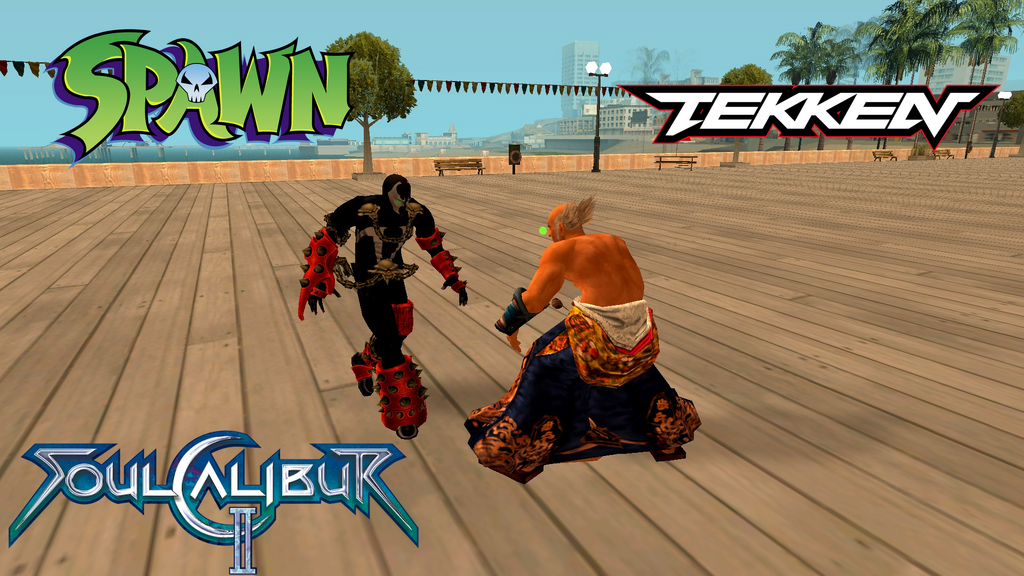
Heihachi and Spawn from Soul Calibur 2
- MassterGolden900 | caricato da MassterGolden900
- 09/24/2026
- 16 Download
Valutazioni:
Per favore, prima accedi.
Preferiti:
Videos
Non è ancora stato aggiunto alcun video.Devi aver effettuato l'accesso per aggiungere video a questa mod.
Descrizione
"Get a load of this!"
"I'm sick of this."
"Silence, die, burn."
"You're pissing me off."
"Get the hell outta my way."
"Malebolgia, just you wait."
"You're not getting any sympathy from me."
"Has the devil got ya?"
"This is pissing me off."
"What is Soul Edge?"
"Got not time for this."
"Get the hell out before i change my mind."
"You know about Soul Edge? You! Answer me!" -Spawn quotes in Soul Calibur 2.
Spawn is a Hellspawn sent to Earth to deliver evil souls to Hell. However, Spawn became the pseudo-protector of New York City, battling forces from both Heaven and Hell. The legacy of the Hellspawns spans history, drawing power from enigmatic necroplasm and sinister creatures such as worms, bats, and wolves. Medieval Spawn was one of the earlier Hellspawns and was killed by Angela, a seraphic warrior. Albert Simmons was the 20th-century Hellspawn, emerging in the 1990s. He sacrificed himself to escape eternal torture, but his actions resulted in the reanimation of James Downing. Jim bore the mantle of Hellspawn for several years until Al's return in 2015.
Spawn was created by Todd McFarlane in his original incarnation, first appearing in *Spawn* #1 (1992). The modern version was created by Paul Jenkins, Todd McFarlane, and Jonboy Meyers, first appearing in *Spawn* #250.
*Spawn* is the title featuring the character of the same name, both created by Todd McFarlane. The series has spawned spin-off comics—including *Angela*, *Curse of the Spawn*, *Sam and Twitch*, and the manga *Shadows of Spawn*—as well as a successful HBO animated series (running from 1997 to 1999), a 1997 feature film (starring Michael Jai White as Spawn), and various video games for different consoles. It also generated a prolific line of collectible figures; their high level of detail put the McFarlane Toys brand on the map within the toy and action figure industry. In recent years, the original creator confirmed plans for a long-awaited film sequel or reboot; production is currently underway, and—pending the finalization of outstanding deals—filming and release could take place in the early 2020s. The character also appears in annual collections, special miniseries by guest writers and artists, and landmark crossover stories with other comic book titles.
Al Simmons, a CIA agent, is murdered by his own boss after uncovering evidence of corruption. Simmons's desperate soul ends up in Hell; there, longing to see his wife Wanda again, he strikes a deal with the demon Malebolgia, who transforms him into a "Spawn" (an undead hellspawn).
Five years after his death, Spawn returns to Earth—hideously disfigured from having been killed by fire—yet possessed of various dark, mystical powers. Circumstances prevent him from reuniting with his wife, who has since married his best friend, and the couple now has a daughter.
Throughout the story, Spawn struggles to hold onto his humanity while seeking a way to break free from Malebolgia's control and battling a variety of enemies, ranging from supernatural foes to the mafia.
The comic began with a tone very similar to the superhero genre—resembling Todd McFarlane’s earlier works—but the protagonist was an anti-hero with more flaws than typical heroes. Later, the comic became significantly darker than the early issues suggested. To introduce the title to readers, McFarlane had to adopt an approach that was somewhat simpler than he had originally intended, making it read like a more conventional superhero story. As the comic gained momentum and established itself, McFarlane was able to shift the tone closer to his own vision.
Largely due to the popularity McFarlane had recently garnered illustrating Marvel Comics' *The Amazing Spider-Man* and *Spider-Man* titles, Spawn became an instant sales sensation—and arguably the most popular comic book character from a third-party publisher since Marvel and DC began dominating the market in the 1960s.
The series has spawned several spin-off comics, including *Angela*, *Curse of the Spawn*, *Spawn: The Dark Ages*, *Sam and Twitch*, and the Japanese manga *Shadows of Spawn*. *Spawn* was adapted into a 1997 film, an HBO animated series that ran from 1997 to 1999, and a line of action figures whose unprecedented detail turned McFarlane Toys into a giant within the toy industry.
Since then, Spawn's popularity has cooled somewhat, and creators other than McFarlane have taken charge of the monthly series—a source of criticism, given that McFarlane and his colleagues had left Marvel Comics precisely because they believed creators should own and control their own characters. Nevertheless, the monthly series continues, becoming—along with Savage Dragon—one of the two original Image Comics titles still being published today.
Spawn enjoyed considerable popularity during the 1990s—a truly remarkable feat for a character not belonging to DC Comics or Marvel Comics. Spawn was highly popular between 1994 and 1995, a success partly attributable to the widespread popularity of McFarlane Toys; the brand expanded beyond specialty shops, with its products sold at major U.S. retailers such as Toys "R" Us and KB Toys. This boosted the title's profile and attracted the attention of both younger audiences and older toy collectors who encountered the merchandise.
It is impossible to pinpoint exactly when this popularity ended—at least in terms of a specific date. Generally speaking, Spawn's popularity peaked with the 1997 *Spawn* movie. The character's popularity began to wane slowly thereafter, eventually falling largely off the mainstream radar between 1998 and 1999. Comic book sales have steadily declined, although the series continues to be published today. Nevertheless, the figures produced by McFarlane Toys remained highly popular, primarily due to their incredible detail.
Subsequently, the hype surrounding Spawn #150 allowed that issue to quickly sell out, as a new creative team was brought on board and fan interest in the comic increased again, but the comic was still criticized in most circles.
In 1993, Todd McFarlane hired Neil Gaiman (along with other renowned authors such as Frank Miller and Dave Sim) to write an issue of his *Spawn* series. During this stint, Gaiman introduced the characters Cogliostro, Angela, and Medieval Spawn. All three characters continued to feature prominently in the series after Gaiman's involvement ended and were closely linked to McFarlane's toy company, McFarlane Toys. Cogliostro played a significant role in the 1997 live-action film. McFarlane had previously acknowledged Gaiman as a co-creator of the characters and had paid him royalties for reprints, graphic novels, and action figures. However, after a few years, he stopped paying royalties and informed Gaiman that he held full rights to the characters; citing the copyright notice in issue #9, he claimed that Gaiman’s work was "work-for-hire" and that he (McFarlane) was the sole owner. In 2002, Gaiman filed a lawsuit against McFarlane, who responded with a countersuit. Gaiman had partnered with Marvel Comics to form Marvels and Miracles, LLC, which funded the litigation. The primary objective was to resolve a dispute over the ownership of another character in which Gaiman claimed an interest—Miracleman—to which McFarlane was believed to hold significant rights following his purchase of Eclipse Comics' assets. This specific dispute was dismissed. Instead, the court ruled on the issues of breach of contract, ownership rights, and intellectual property regarding the characters from issue #9. McFarlane presented several arguments, all of which were rejected, resulting in a significant judgment against McFarlane and Image Comics. The case was appealed, and the judgment was upheld in a 2003 decision. Gaiman’s rights as co-creator and co-owner of Cogliostro, Angela, and Medieval Spawn were recognized. The court held that the collaboration between Gaiman and McFarlane resulted in each contributing half of the work. Gaiman wrote the story and McFarlane illustrated the character; consequently, each held a 50% stake in the characters. The consequences of this lawsuit remain unclear, and the debate regarding Miracleman had not yet been resolved. In a subsequent reprint collection of the first dozen issues of Spawn, the controversial issue (along with issue #10) was excluded.
Many issues of *Spawn* have been collected in various trade paperback (TPB) volumes, published since the mid-1990s. The original collections for the United States and the United Kingdom include issue #9 but not issue #10 (the appearance of Cerebus).
Each volume contains four or five issues; the original Spawn trade paperback (TPB) series began in 1995 with a specific cover design. Following the 1997 live-action film, a new cover design was introduced, featuring new artwork by Brent Ashe for Volumes 1–7 and Ashley Wood for Volumes 8–12. All these volumes were given subtitles for subsequent printings. The TPB series ended after Volume 12, but several new collections appeared between 2006 and 2008, gathering the work of writer David Hine—specifically the entire "Armageddon" storyline. In 2009, a new collection was released covering part of the "Endgame" storyline, which marked creator Todd McFarlane's return to the flagship title alongside co-writer Brian Holguin and artist Whilce Portacio. The various Spawn collections for the United States are as follows, including issue numbers:
Book 1, "Beginnings", 1-5
Book 2, "Dark Discoveries", 6-9, 11
Book 3, "Book 3", 12-15
Book 4, "Book 4", 16-20
Book 5, "Death and Rebirth", 21-25
Book 6, "Pathway to Judgement", 26-30
Book 7, "Deadman's Touch", 31-34
Book 8, "Betrayal of Blood", 35-38
Book 9, "Urban Jungle", 39-42
Book 10, "Vengeance of the Dead", 43-47
Book 11, "Crossroads", 48-50 (#50 is double-sized)
Book 12, "Immortality", 51-54
Spawn: The Armageddon Collection Part 1 - collects issues 150-155
Spawn: The Armageddon Collection Part 2 - collects issues 156-164
Spawn: The Complete Armageddon Collection - collects issues 150-164 (October 2007)
Spawn: New Flesh Collection - collects issues 166-169 (note: #165 was not included because it featured the Mandarin Spawn story) (December 2007)
Spawn: Neo Noir - collects issues #170-175
Spawn: Endgame Volume 1 (June 2009) - collects issues #185-190 (ISBN 1607060701)
Spawn: Endgame Volume 2 (Nov. 2009) - collects Spawn issues #191-196
In 2005, the complete *Spawn* series began appearing in massive trade paperback (TPB) collections titled *Spawn Collection*, each containing approximately twenty issues (with the exception of Volume 1). These releases began following the lawsuit filed by Neil Gaiman; consequently, they do not include issue #9 (featuring the first appearances of Angela and Cogliostro, both created by Gaiman) or issue #10 (featuring Dave Sim's Cerebus). *Spawn Collection* Volumes 1 and 2 were published in both hardcover and TPB formats, whereas from Volume 3 onwards, the series was released exclusively in TPB format. As of 2009, *Spawn Collection* Volume 1 is out of print; its fourth printing was released in June 2007.
Spawn Collection Volume 1 – collects issues #1–8, #11–12
Spawn Collection Volume 2 – collects issues #13–33 (July 2007)
Spawn Collection Volume 3 – collects issues #34–54 (March 2007)
Spawn Collection Volume 4 – collects issues #55–75 (September 2007)
Spawn Collection Volume 5 – collects issues #76–95 (April 2008)
Spawn Collection Volume 6 – collects issues #96–116 (August 2008)
*Spawn Collection* Volume 1 ranked 17th on the list of the top 100 graphic novels for December 2005, with advance sales of 3,227.
However, the *Spawn Collections* volumes were discontinued, ending with Volume 6 in 2008; in 2009, Image Comics and Todd McFarlane Productions announced a new format featuring both softcover and hardcover editions at various price points, as well as further reprints of the early issues (see below).
In 2009, a newly redesigned and reformatted line of trade paperbacks (TPBs)—the *Spawn Origins Collection*—was announced, once again collecting the early issues of *Spawn*. These new volumes featured new cover art by Greg Capullo, recreating classic *Spawn* covers. This line has since replaced the massive *Spawn Collection* trade paperbacks released between 2005 and 2008 (see above).
Spawn Origins Collection Volume 1 – collects issues #1–6 (May 2009)
Spawn Origins Collection Volume 2 – collects issues #7, 8, 11–14 (July 2009)
Spawn Origins Collection Volume 3 – collects issues #15–20 (December 2009)
Spawn Origins Collection Volume 4 – collects issues #21–26 (January 2010)
Spawn Origins Collection Volume 5 – collects issues #27–32 (June 2010)
Spawn Origins Collection Volume 6 – collects issues #33–38 (July 2010)
These releases were originally published in the UK by Titan Books across fifteen volumes—each containing 5–6 issues—with titles based on religious themes. The volumes covered the original series issues 1–82, with the exception of the previously mentioned issue 10.
"Creation" – collects issues 1–5
"Evolution" – collects issues 6–9 and 11
"Revelation" – collects issues 12–15
"Escalation" – collects issues 16–20
"Confrontation" – collects issues 21–25
"Retribution" – collects issues 26–30
"Transformation" – collects issues 31–36
"Abduction" – collects issues 37–42
"Sanction" – collects issues 43–48
"Damnation" – collects issues 49–53
"Corruption" – collects issues 54–58
"Devastation" – collects issues 59–64
"Termination" – collects issues 65–70
"Resurrection" – collects issues 71–76
"Ascension" – collects issues 77–82
Spin-off comic TPB collections
"Angela" – collects issues 1–3 of Neil Gaiman's "Angela" and the 2005 one-shot comic.
"Spawn: The Undead" – collects issues 1–9 of "Spawn: The Undead"
"Spawn: Godslayer Collection 1" – collects issues 1–6 of "Spawn: Godslayer"
"Sam & Twitch Book 1: Udaku" – collects issues 1–8 of "Sam and Twitch". "Sam & Twitch: The Brian Michael Bendis Collection 1" – collects issues 1–9
"Sam & Twitch: The Brian Michael Bendis Collection 2" – collects issues 10–19
Curse of the Spawn
"Curse of the Spawn: Book 1: Sacrifice of the Soul" – collects issues 1–4
"Curse of the Spawn: Book 2: Blood and Sutures" – collects issues 5–8
"Curse of the Spawn: Book 3: Shades of Grey" – collects issues 9–11, 29
"Curse of the Spawn: Book 4: Lost Values" – collects issues 12–14, 22
"The Best of Curse of the Spawn" – collects issues 1–8, 12–16, and 20–29, but without the coloring.
----------------------------------------------------------------------------------------------------------------------------------------
"Who do you think you are?"
"What can you do?"
"That's all you've got? Not even worth my breath!"
"Get lost, you're in my way!"
"Let's see what you're made of."
"What's your name, little boy?"
"Hmpph! Insolent fool!"
"Come back when you're ready."
"I'd love to show this to that idiot son of mine!"
"You may be a worthy opponent!"
"That's it?... That was boring."
"You think can you beat me? That's mildly amusing."
"Even Kuma is stronger than you!" -Heihachi Mishima quotes in Soul Calibur 2.
Heihachi Mishima (三島平八 Mishima Heihachi?) is one of the main characters in the Tekken series. He debuted in the first game of the series and returned for all subsequent titles. Although he is considered the main protagonist and anti-villain of the second game, he is the series' primary antagonist and is almost always responsible for its catastrophic events. He played a pivotal role in the storylines of Tekken 5 and Tekken 6, and returned as the central antagonist in Tekken 7. Heihachi is the son of Jinpachi Mishima, the husband of Kazumi Mishima, the father of Kazuya Mishima and Lars Alexandersson, the adoptive father of Lee Chaolan, and the paternal grandfather of Jin Kazama.
Heihachi Mishima is the son of Jinpachi Mishima, a man who founded a family corporation that expanded by selling weapons during World War II. Jinpachi became more of a pacifist after the war; he wished to distance himself from arms manufacturing and focus on developing his martial arts style, Mishima Style Fighting Karate. He trained his son, Heihachi, as well as Heihachi's future wife, Kazumi Hachijo. Heihachi and Kazumi married, and when Heihachi was 26, they had a son named Kazuya Mishima. Heihachi grew into a formidable martial artist and a shrewd businessman. He coveted his father's corporation and disagreed with the direction his father had taken. When he was around thirty years old, Heihachi staged a coup and wrested control of the corporation from his father. He began reshaping the company into what is now known as the Mishima Zaibatsu. Jinpachi and Kazumi were alarmed by these actions, and Jinpachi attempted to reclaim the corporation from his son. Jinpachi failed, and Heihachi imprisoned him beneath the family temple, Hon-Maru. Heihachi appears to have kept Jinpachi alive for a significant period after this; Jinpachi's death was not confirmed until Wang Jinrei received the news some fifteen years later. Heihachi would have been forty-five years old at that time.
Shortly after imprisoning his father, Heihachi confronted his wife, Kazumi, who asked him to abandon the dark path he was on. Heihachi ignored her pleas, and over the following weeks, Kazumi frequently fell ill and appeared to exhibit a violent second personality. Heihachi nursed her back to health, but matters came to a head when Kazumi attacked him one day in the family dojo. Kazumi transformed into a demonic creature and claimed her family had received a premonition that Heihachi would bring great darkness to the world. She told Heihachi that her mission all along had been to stay by his side and either dissuade him from his path or kill him if he intended to pursue it. The two fought, and despite his love for her, Heihachi ended up killing Kazumi. Kazuya, Heihachi's five-year-old son, discovered that Heihachi was responsible for Kazumi's death and confronted him. Heihachi struck the boy and threw him off a cliff. His motivations for doing so appear mixed. He later claimed he wanted to see if Kazuya possessed the same "affliction" as Kazumi, though various other accounts state it was to see if Kazuya was strong enough to climb back up, as Heihachi considered him too weak to be his heir. Indeed, Kazuya did climb back up the cliff, and Heihachi seems to have taken this as a sign that Kazuya was a worthy heir to his teachings.
Now unopposed and in sole control of the Mishima Zaibatsu, Heihachi began rapidly expanding the organization and bolstering its weapons manufacturing capabilities. One of his early involvements was the "Big Apple War" in New York, where the Mishima Zaibatsu fueled local gang violence and manipulated local politicians and police, resulting in numerous civilian casualties. Another incident involved the search for an ancient Native American pendant. He dispatched employees to retrieve the treasure, but one man fell in love and chose to conceal its location from Heihachi. Heihachi had him killed for this betrayal—an act that, years later, set the stage for the man's daughter to seek revenge against him. At some point—likely while still in his thirties—Heihachi traveled to China on business and spotted a boy fighting in the street. Impressed by the child, he adopted him and brought him to Japan to serve as a rival to Kazuya, hoping to push his son to improve. Heihachi raised his adopted son, Lee Chaolan, alongside Kazuya; he provided both with an aristocratic upbringing and business training, taught them Mishima-style Karate, and instilled in them his own ruthless code: the only thing that matters is who is left standing—nothing else. Both sons came to harbor deep resentment toward Heihachi for his cruelty. When he was around 47 years old, Heihachi fathered a child with a Swedish woman to see if any offspring other than Kazuya might possess that same—as yet unquantifiable—diabolical phenomenon. Upon discovering that the boy lacked this ability, Heihachi apparently lost interest in him.
Kazuya, in particular, despised his father and had been determined to kill him since the age of five. Biding his time and gathering his strength, Kazuya saw his opportunity when Heihachi organized a prestigious international martial arts competition: the King of Iron Fist Tournament. Heihachi offered substantial cash prizes—and even ownership of the Zaibatsu itself—to anyone who could defeat him. Kazuya succeeded in defeating his father, taking him back to the very cliff from which he had been thrown twenty-one years earlier, and cast him into the abyss. Heihachi survived the fall but was in no condition to challenge Kazuya, who had seized control of the Mishima Zaibatsu as his prize. Letting his children believe he was dead, Heihachi trained in secret in the mountains, accompanied only by his pet bear, Kuma.
Kazuya's tenure as head of the Zaibatsu was marked by allegations of criminal operations, assassinations, trafficking, illegal animal experimentation, and land confiscation in an attempt to establish his own nation-state. When Kazuya announced a second King of Iron Fist Tournament to demonstrate his martial superiority, Heihachi entered the competition. Although Kazuya transformed into a demon—much like Heihachi's late wife—Heihachi managed to exploit an internal moral conflict within Kazuya and defeat him. To ensure his son was truly dead, Heihachi took a helicopter to a volcano and rolled his son's body into the active crater. Lee Chaolan, who had sided with Kazuya and worked for him at the Zaibatsu, was banished by Heihachi; Lee fled Japan and would not return for twenty-one years.
Having dealt with the betrayal of his children, Heihachi—once again the leader of the Zaibatsu—founded his own private army, the Tekken Force. Around this same time, he also established the Mishima Polytechnic School; while it masqueraded as a high school and polytechnic college, it also served as a secret training facility for the Tekken Force. During the second tournament, Kazuya had imprisoned Nina Williams after she attempted to assassinate him. When Heihachi took over the Zaibatsu, Nina was placed in cryosleep within experimental machines. Heihachi kept her in the machine, and her ova were harvested for use in a super-soldier program. The experiment claimed the lives of all the children involved except one, and Heihachi shut it down, deeming it a failure. Also during this period, Heihachi worked on the Zaibatsu's public image; he used the Tekken Force to cultivate a benevolent reputation by deploying them on humanitarian and peacekeeping missions. In reality, however, Heihachi was pursuing a rumored source of immense power: a creature known only as Ogre. It was said that possessing the creature's genetic material could prolong life and enhance power. Heihachi succeeded in locating the creature, but upon awakening it at its temple in Mexico, the entire Tekken Force team on the mission was wiped out, and the creature vanished. About sixteen years after Heihachi had overthrown Kazuya, a fifteen-year-old boy appeared before him, claiming to be the son of Kazuya and Jun Kazama. The boy, Jin Kazama, caught Heihachi's attention when he stated that his mother had been killed by a creature matching the description of Ogre. At that time, Ogre appeared to be preying upon the strongest martial artists. Capitalizing on the boy's desire for revenge, Heihachi undertook his training, intending to use him to draw Ogre out into the open once he was strong enough.
Heihachi trained Jin for four years, and the two appear to have shared a relatively friendly relationship during this time. Heihachi took Jin on business trips—including one to South Korea—and trained him alongside a young girl named Ling Xiaoyu; she had previously stowed away on a Mishima cargo ship and impressed Heihachi enough for him to accept her as his pupil. Once Jin was strong enough, Heihachi convened the third King of Iron Fist Tournament. Ogre appeared at the event, and Jin succeeded in killing him. With Ogre's DNA secured and Jin no longer needed, Heihachi acted on his suspicion that his grandson might harbor a latent demonic tendency, just like his father and grandmother. He shot Jin preemptively. Jin was struck in the head by the bullet, and the near-fatal experience awakened his Devil Gene—much like the fall from the cliff had done for Kazuya. Heihachi was then attacked by Devil Jin, who subsequently flew off into the night.
Over the next two years, Heihachi discovered that despite possessing Ogre's DNA, his own was incompatible with it. Dr. Abel speculated that if Heihachi could access the genetic material of a human possessing the Devil Gene, he could synthesize a formula compatible with Heihachi himself. Intent on realizing his Devil-Human Integration Program, Heihachi launched a raid on a new biotechnology firm, G Corporation, which was rumored to have recovered Kazuya's remains from the volcano. Although the team succeeded in stealing the GENOCELL research, they encountered Kazuya himself, who had been rescued from the brink of death by G Corporation. To secure the genetic material of a human carrying the Devil Gene, Heihachi announced the 4th King of Iron Fist Tournament to lure out Kazuya and Jin.
Both Kazuya and Jin attended the tournament, but Heihachi interrupted the competition and abducted Jin before the semifinals. After defeating Kazuya in the final, Heihachi took him to Hon-Maru, where Jin was being held captive. Upon encountering his son for the first time, Kazuya was possessed by Devil, who then revealed to Heihachi that when Kazuya had been thrown into the volcano, Devil had split in two—with one half seeking out Kazuya's unborn son. Devil knocked Heihachi unconscious and then attempted to extract his other half from Jin. The attempt failed; when Heihachi awoke, Kazuya was unconscious, and a partially transformed Jin stood before him. Jin defeated Heihachi as well and raised his fist to deliver the killing blow, but at the last moment, he spared him and flew away. Moments later, a battalion of Jack robots arrived, forcing Heihachi and Kazuya to fight side-by-side to fend off the attack. Seizing the opportunity, Kazuya shoved Heihachi toward the robots and flew off, now able to control Devil. The robots detonated, blowing up the temple with Heihachi inside and unleashing the sealed, demonically animated body of Jinpachi Mishima from beneath.
Heihachi was blown several kilometers away by the explosion, and when he awoke, he found himself in the middle of a forest. He hovered between life and death for several weeks, with no memory of the events that transpired during that time. By the time he regained his senses, the 5th King of Iron Fist Tournament had taken place in his absence, and a victor had emerged to claim the Mishima Zaibatsu: Jin Kazama. Heihachi was furious when he heard this. He rallied his remaining strength at the Mishima Estate, supported by a small contingent of the Tekken Force that had stayed loyal to him. It became clear that Jin had launched a global war using the Zaibatsu. While spying on his grandson, Heihachi began monitoring a rogue Tekken Force captain who had defected, taking half the force with him. The rogue captain approached Heihachi seeking information; after failing to win the captain over to his side, Heihachi—having recovered from his amnesia—was confronted by the man, who revealed himself to be Heihachi's illegitimate son, Lars Alexandersson. Uninterested in family ties, Lars shot at Heihachi, though Heihachi caught the bullet between his teeth and laughed at the attempt.
Jin fell in battle against a creature awakened by his war in a Middle Eastern desert. In his absence, Heihachi regained control of the Zaibatsu, forced Nina Williams to work for him, and began repairing the Zaibatsu's shattered image. However, he continued Jin's war—both against G Corporation and, more subtly, in other countries, claiming he was occupying them for their own safety. He utilized the information network of an ancient secret society and began searching for information on Jin. When Lars managed to capture Jin first, Heihachi conceded on that front and instead focused on waging a media war against Kazuya. Heihachi exposed Kazuya's devilish form to the world and then dictated his own version of the past to a journalist to cement his legacy. He then challenged Kazuya to a fight at the mouth of a volcano. Despite wearing down Devil Kazuya, Heihachi ultimately fell to him. Kazuya carried his body to the edge of the crater and cast Heihachi into the magma below, reciting the words Heihachi had taught him to live by as he did so: The only thing that matters is who is left standing—nothing else.
Heihachi is an older but muscular man. He sports a hairstyle that is distinctive throughout the Tekken series, featuring hair swept back behind his ears, large sideburns, and a mustache. Starting with Tekken 2, Heihachi bears a star-shaped scar on his chest, sustained when Kazuya threw him off a cliff at the end of the first Tekken game. Initially, his hair is black, but following the 19-year gap between Tekken 2 and Tekken 3, his hair has turned gray. Consequently, his black hair appears in Tekken 1, Tekken 2, the non-canon Tekken Tag Tournament 2, and flashbacks in Tekken 7 (though he can also be customized in Tekken 7 to resemble his younger self). For his legacy outfit, he wears a sleeveless black karate gi featuring a tiger-head design on the back, secured by a red belt. In Tekken 7, he sports a new Player 1 outfit that includes an armored shoulder guard, an open sleeveless vest bearing the Mishima Zaibatsu logo, trousers with a glossy pattern, and armored boots.
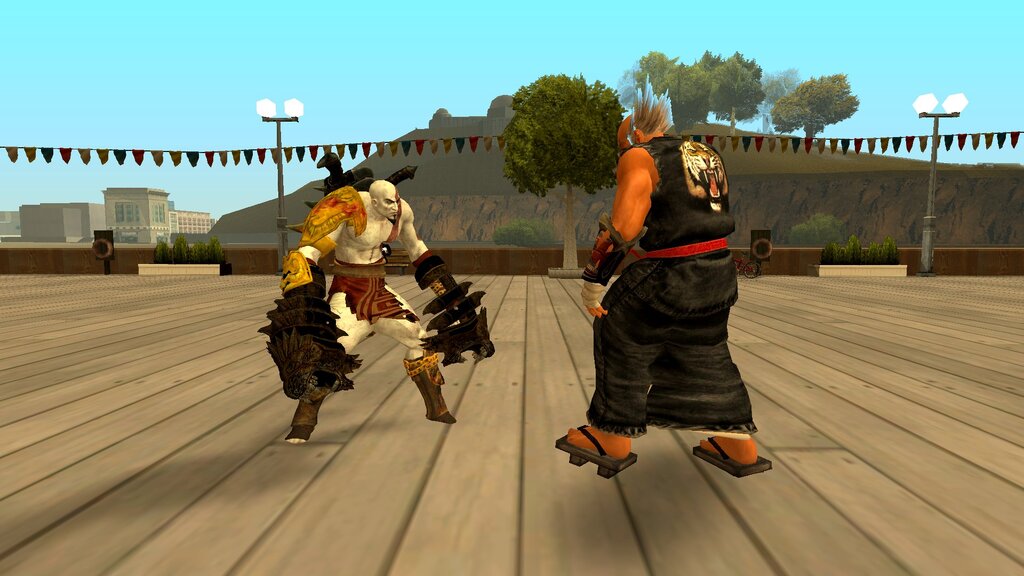
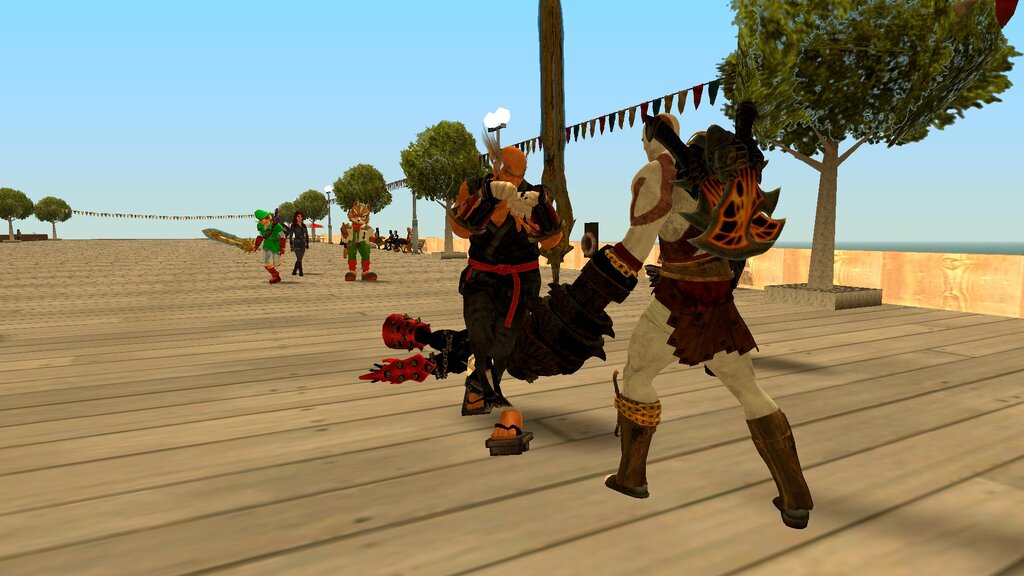
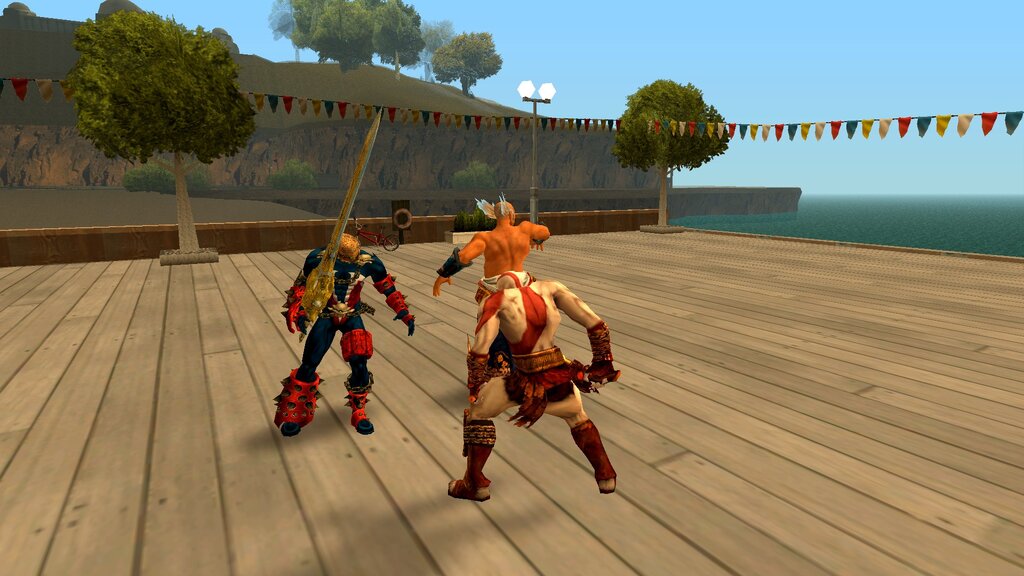
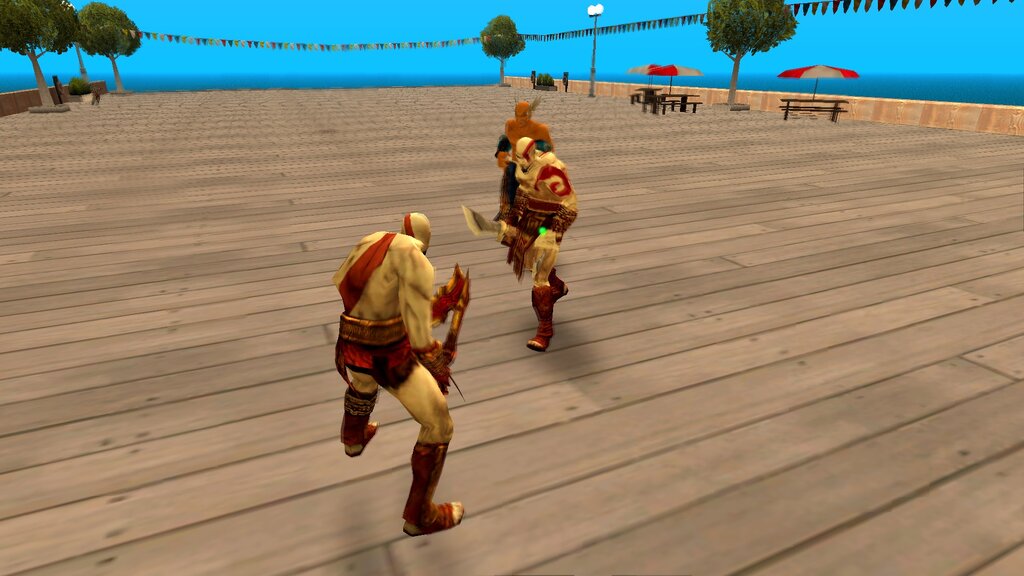
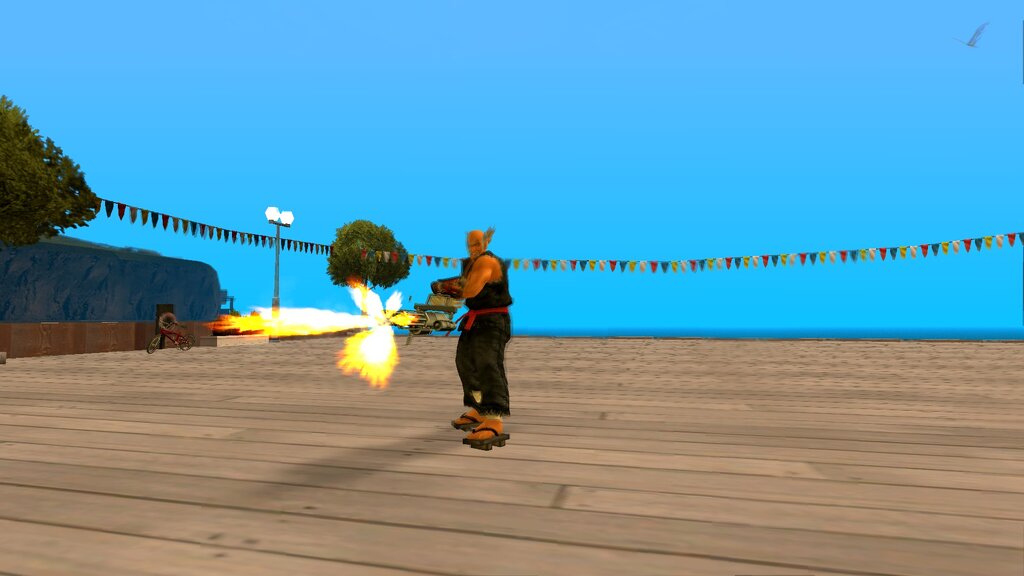
Here is what I promised. As I said, I’m truly sorry for the delay, but it was worth it, right? Anyway, I present to you the true King of the Iron Fist from Tekken—and, in my opinion, the absolute worst father, grandfather, and human being of them all. Just look at his crimes. And, of course, the guy—or monstrosity—who has likely had more crossovers than any comic book franchise: Spawn, also known as Al Simmons. Alright, now you can enjoy them.
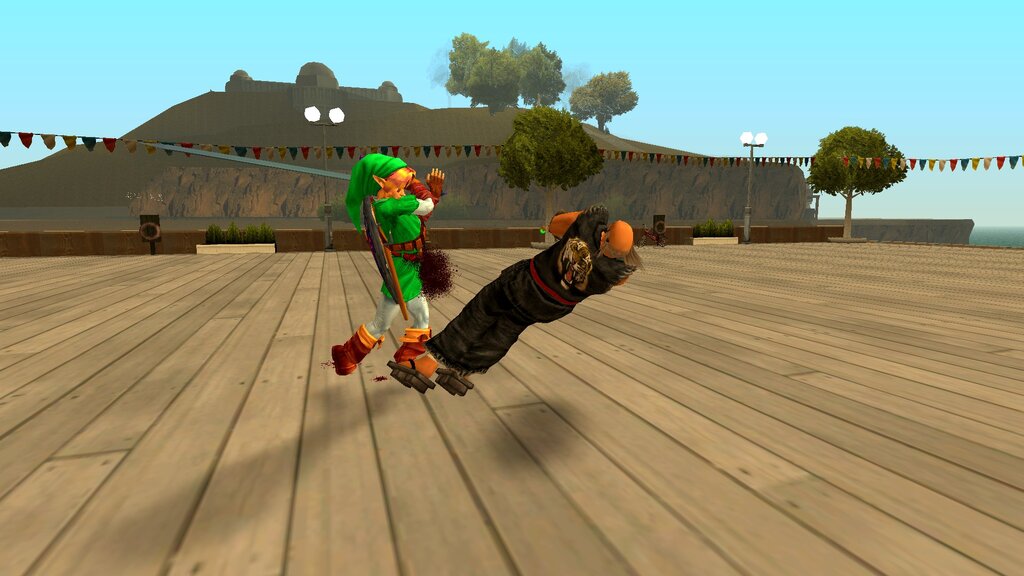
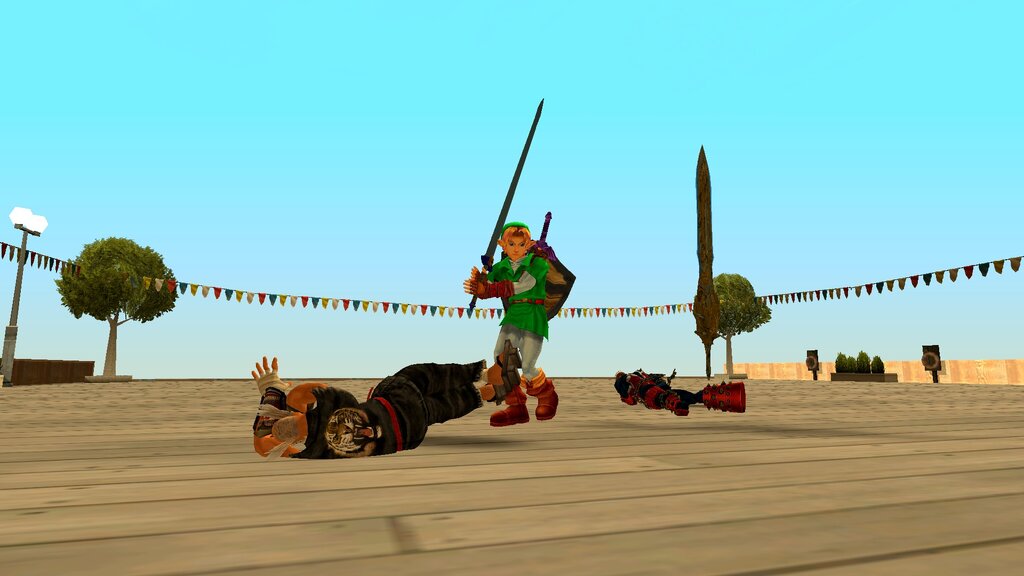
Both appeared in *SoulCalibur II* and *SoulCalibur II HD*—except for Link, due to... Nintendo issues, you know? Ahem... much like what happened with Link and Samus in *Marvel: Ultimate Alliance* on the PS2. Because of that issue, Nintendo stopped lending out their characters; they guard their IPs very closely. Spawn, however, did return and has even appeared in other games like *Mortal Kombat*, while Heihachi appeared in *PSASBR* (aka Sony's *Smash Bros*).
This pack includes:
-Spawn P1.
-Spawn P2.
And
-Heihachi P1.
-Heihachi P2.
That’s all. By the way, I’ve played all three versions of *SoulCalibur II*, as well as the *Tekken* and *Spawn* games, and *The Legend of Zelda* titles. I didn't include Link because I uploaded him a long time ago. Enjoy these two awesome characters! See ya!
Commenti
Sono già stati pubblicati 0 commenti.